Why Your Skin Feels Thirsty in Perimenopause (And What Actually Works)
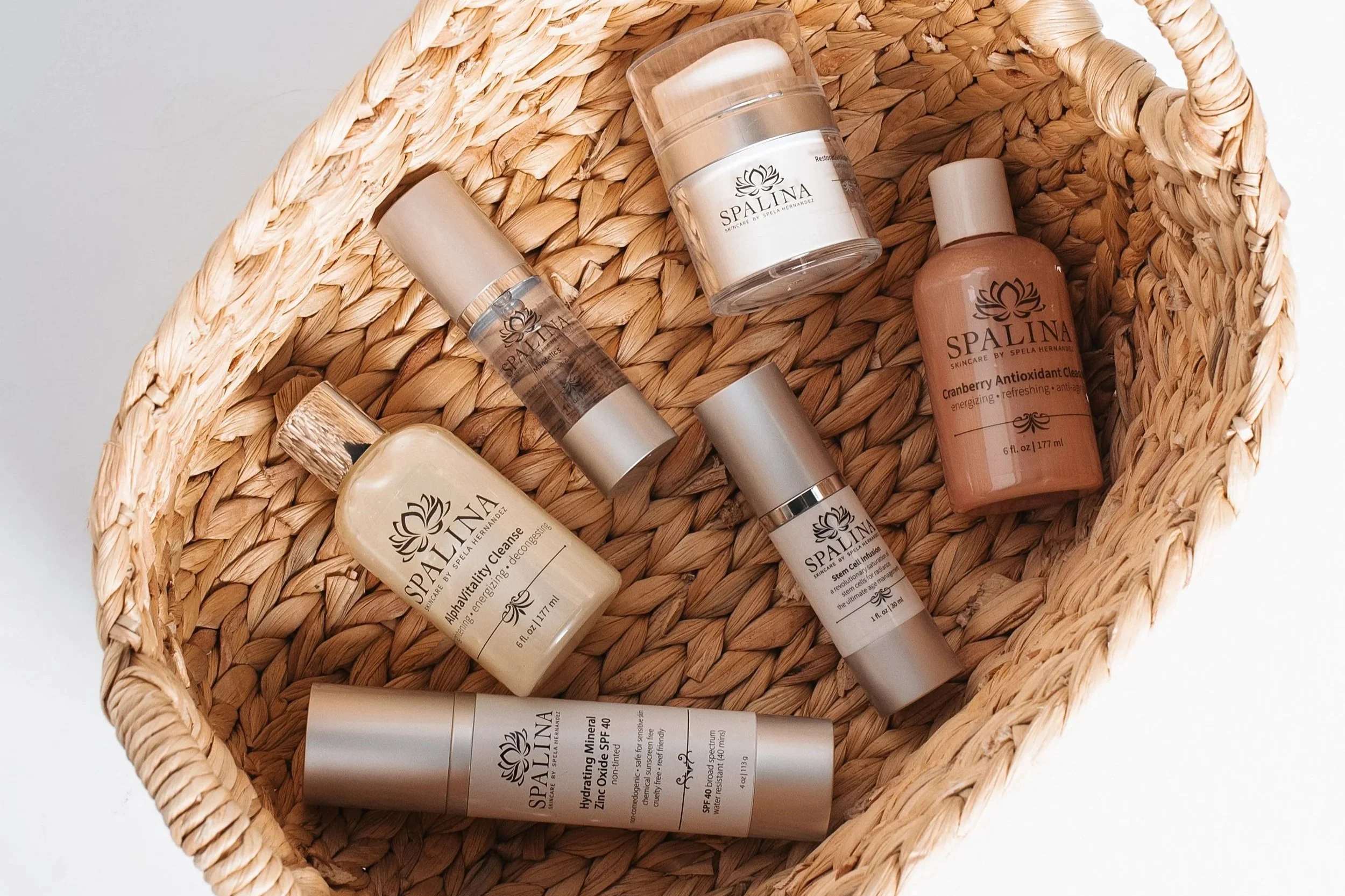
You wake up, look in the mirror, and your skin feels… different. Tighter. Drier by mid-morning, no matter how much water you drank yesterday. Fine lines you swear weren't there last month. Makeup sitting on top of your skin instead of melting in.
You're not imagining it. And the more you understand what's actually happening, the easier this becomes to address.
After 20+ years of treating women's skin in my studio, I want to walk you through what changes in perimenopause, why most "hydration" advice misses the mark, and what your skin really needs in this season of life.

What's actually changing in perimenopause
Perimenopause is the decade (sometimes longer) leading up to menopause when your estrogen starts to fluctuate, then decline. Estrogen is one of your skin's best friends. It tells your skin to make collagen, hold onto moisture, and keep your barrier strong.
When estrogen drops, three things happen at once:
Collagen production slows down. We lose about 30% of our collagen in the first five years of menopause.
Your skin holds less water.
Your barrier — the outer layer that locks moisture in — gets thinner and more permeable.
So the dryness you're feeling isn't really about water. It's about your skin losing the ability to hold the water it has, and losing the cellular signals that used to tell it to repair itself overnight.
Hydration is about your barrier, not your water bottle
This is the part most women miss. Drinking water is good for you, but it won't repair a leaky barrier. And a heavy cream on top of a compromised barrier is like putting a roof on a house with no walls.
A healthy barrier is like the mortar between bricks. When estrogen drops, that mortar starts to break down, and moisture escapes faster than you can put it back. This is why peri skin can feel oily and dehydrated at the same time, why it suddenly reacts to products it used to love, and why it can look dull even right after you moisturize.
That's a barrier story. And understanding it changes the way you approach everything else.
Why product jumping isn't working
Here's something worth sitting with: skin care isn't actually complicated. Marketing makes it complicated.
The reason a routine often stops "working" isn't because the right magic product hasn't been found yet. It's because the skin is being asked to adapt to something new every few weeks. Your skin renews itself in cycles of roughly 28 days in your 20s, and longer as you age. Real change shows up over weeks and months, not days.
The mindset shift that helps most: think of your serums as your skin's food. They're the nutrients. Cleansers and moisturizers play supporting roles, but serums are where the real work happens — where active ingredients are concentrated enough to actually reach your cells and feed them what they need to function. That's the step that creates change.
What perimenopausal skin is actually hungry for
Most ingredients marketed as "hydrating" work at the surface. They sit on top of the skin, plump for a few hours, then evaporate. Peri skin needs something more meaningful than that — nourishment at the cellular level, the way estrogen used to provide it.
These are the ingredient families worth understanding:
Human stem cells carry signaling power. They essentially remind your skin how to behave more like it did ten years ago. Not a topical fix — a cellular conversation.
Growth factors are repair instructions. Your skin stops producing them in the same volume during perimenopause, and reintroducing them is part of how you wake the repair engine back up.
Cytokines are cell-to-cell messengers. They coordinate healing, calm inflammation, and keep your skin communicating with itself.
Peptides are collagen messengers. They tell your skin to keep building structural protein even when hormones aren't asking anymore.
Lipids and fatty acids are the building blocks of your barrier. This is the actual mortar going back between the bricks.
Minerals are the cofactors your cells need to carry out every one of these processes. Without them, the rest can't function properly.
Antioxidants defend against oxidative stress, which accelerates visibly in peri.
Trioxilane is oxygenated delivery — it helps drive these actives deeper so the skin actually receives what's being offered to it.
When you see ingredients like these on a label, you're looking at something designed to work with your skin's biology, not just sit on top of it.
The takeaway
Most products are formulated to chase symptoms — a cream for dryness, a serum for fine lines, something else for redness. In perimenopause, those symptoms tend to share one root cause: a cellular system running low on the signals, building blocks, and oxygen it used to receive for free.
When you feed the root, the symptoms quiet down on their own. That's the framework worth carrying with you into every product decision from here on.
You don't need more products. You need to understand what your skin is actually asking for.
If you want to keep learning what really works for skin in perimenopause and menopause, come find me on Instagram — I share ingredient breakdowns, daily tips, and the lessons from 20+ years of working with women in this stage.
